
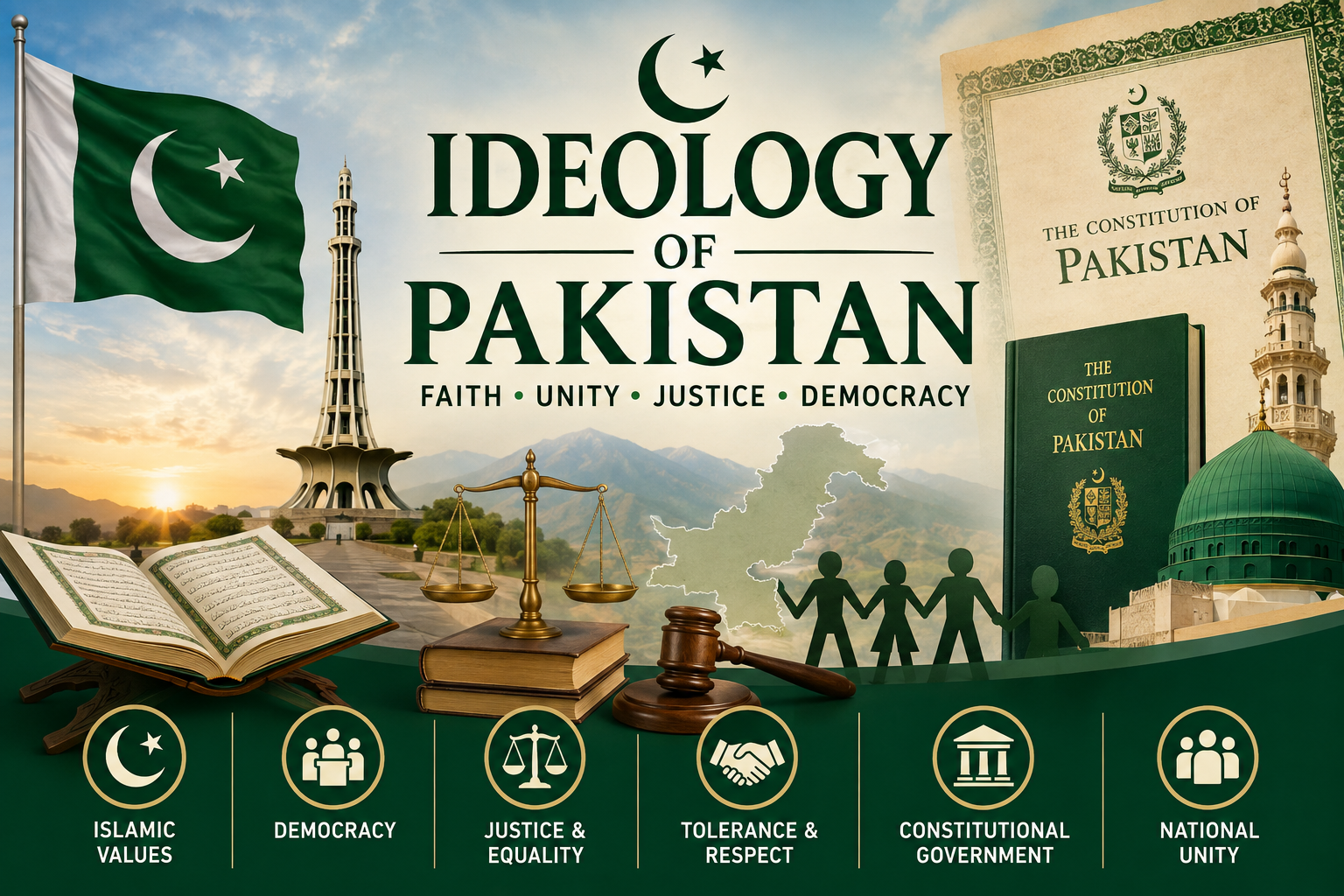
Political Dynamics
Introduction
Political dynamics refers to the forces, institutions, and processes that influence the political system of a country. These dynamics shape public opinion, develop political ideologies, influence decision-making, and strengthen democratic institutions. In Pakistan, political dynamics involve political parties, pressure groups, the media, religious institutions, educational institutions, and government agencies. Together, these institutions play an important role in maintaining democracy, protecting national interests, and promoting political stability.
1. Agencies Responsible for the Creation of Ideologies
Meaning of Ideology
An ideology is a system of ideas, beliefs, and values that guides individuals, political parties, and governments in making political, economic, and social decisions.
Agencies Responsible for Creating Ideologies
a) Family
The family is the first institution where children learn moral values, religious beliefs, patriotism, discipline, and social responsibilities. It shapes their political thinking from an early age.
b) Educational Institutions
Schools, colleges, and universities develop students’ knowledge about history, democracy, constitutional rights, citizenship, and national values. Teachers and textbooks play an important role in shaping political awareness.
c) Religious Institutions
Mosques, madrasas, churches, temples, and other religious institutions promote ethical values, social justice, peace, and moral responsibility. They influence the political and social attitudes of people.
d) Media
Television, newspapers, radio, and digital media spread political information, educate citizens, influence public opinion, and encourage participation in democratic processes.
e) Political Parties
Political parties educate citizens about national issues, develop political programs, and promote their ideologies through public meetings, campaigns, and manifestos.
f) Government Institutions
Government departments and constitutional bodies create awareness about laws, public policies, elections, and national development through official campaigns.
Importance
Promotes political awareness.
Strengthens democratic values.
Encourages responsible citizenship.
Builds national unity.
Protects constitutional principles.
2. Pressure Groups
Definition
Pressure groups are organized groups that seek to influence government policies and decisions without contesting elections or forming governments.
Characteristics
They focus on specific issues.
They represent the interests of particular groups.
They influence policymakers.
They operate through peaceful and legal methods.
Types of Pressure Groups
Economic Pressure Groups
Business organizations, trade associations, and chambers of commerce.
Labour Unions
Represent workers’ rights, wages, and working conditions.
Professional Associations
Organizations of doctors, lawyers, engineers, teachers, and other professionals.
Student Organizations
Represent educational and student-related issues.
Environmental Groups
Promote environmental protection and sustainable development.
Methods Used
Public campaigns.
Meetings with government officials.
Peaceful protests.
Petitions.
Seminars and conferences.
Social media awareness campaigns.
Importance
Protect citizens’ interests.
Strengthen democracy.
Influence policymaking.
Promote public participation.
Hold governments accountable.
3. Political Parties
Definition
A political party is an organized group of people who share similar political beliefs and seek to gain political power through elections.
Functions
Representation
Political parties represent different groups and communities.
Elections
They nominate candidates and participate in elections.
Government Formation
The majority party or coalition forms the government.
Opposition
Opposition parties monitor government performance and suggest alternatives.
Policy Making
Political parties prepare policies on education, health, economy, foreign affairs, and national security.
Public Awareness
They educate citizens about political rights and responsibilities.
Importance
Promote democracy.
Encourage political participation.
Ensure peaceful transfer of power.
Strengthen accountability.
Protect citizens’ interests.
4. Media
Definition
Media includes television, newspapers, radio, magazines, websites, and social media that communicate information to the public.
Types of Media
Print Media
Electronic Media
Digital Media
Social Media
Functions
Information
Provides news and information.
Education
Educates citizens about laws, elections, and public policies.
Public Opinion
Shapes opinions on political, social, and economic issues.
Accountability
Investigates public issues and encourages transparency.
National Integration
Promotes unity during national emergencies and public events.
Positive Role
Increases awareness.
Encourages informed voting.
Supports democracy.
Exposes corruption.
Promotes public debate.
Challenges
Misinformation.
Fake news.
Political bias.
Sensationalism.
Hate speech.
5. Religious and Educational Institutions
Religious Institutions
Religious institutions promote:
Moral values.
Social justice.
Peace.
Charity.
Community service.
Religious harmony.
Importance
Builds ethical character.
Encourages tolerance.
Promotes national unity.
Strengthens social responsibility.
Educational Institutions
Educational institutions include schools, colleges, universities, and vocational centers.
Functions
Provide education.
Promote research.
Develop leadership.
Teach constitutional rights.
Encourage critical thinking.
Build responsible citizenship.
Importance
Creates educated citizens.
Promotes democracy.
Supports national development.
Encourages innovation.
Develops skilled human resources.
6. Role of Political Parties in the Functioning of a State
Political parties are essential for the smooth functioning of a democratic state.
1. Forming Government
Political parties contest elections. The party with majority support forms the government and implements its policies.
2. Representing Public Opinion
Political parties express the concerns and aspirations of different sections of society.
3. Policy Formulation
They prepare policies related to:
Education
Health
Economy
Employment
Foreign policy
National security
4. Legislative Role
Political parties introduce, debate, and approve laws in Parliament.
5. Accountability
Opposition parties question government decisions and ensure transparency.
6. Political Education
They educate citizens about voting, constitutional rights, and democratic responsibilities.
7. Leadership Development
Political parties train future political leaders and encourage public participation.
8. National Integration
Political parties promote cooperation among provinces, ethnic groups, and communities, strengthening national unity.
Importance of Political Parties
Strengthen democracy.
Protect constitutional government.
Ensure peaceful transfer of power.
Promote political stability.
Encourage citizen participation.
Protect fundamental rights.
Improve governance.
Support national development.
Challenges to Political Dynamics in Pakistan
Political instability.
Corruption.
Weak democratic institutions.
Misinformation and fake news.
Political polarization.
Low political awareness.
Economic challenges.
Lack of transparency.
Suggestions for Improvement
Strengthen democratic institutions.
Promote civic and political education.
Encourage responsible journalism.
Ensure free and fair elections.
Improve transparency and accountability.
Protect freedom of expression within the law.
Encourage dialogue among political parties.
Increase youth participation in politics.
Conclusion
Political dynamics shape the political, social, and economic development of a country. Agencies such as families, educational institutions, religious institutions, media, pressure groups, and political parties influence public opinion and strengthen democracy. Political parties are central to democratic governance because they represent citizens, form governments, make laws, and ensure accountability. A strong democratic culture, informed citizens, responsible media, and effective institutions are essential for political stability, national unity, and sustainable development in Pakistan.